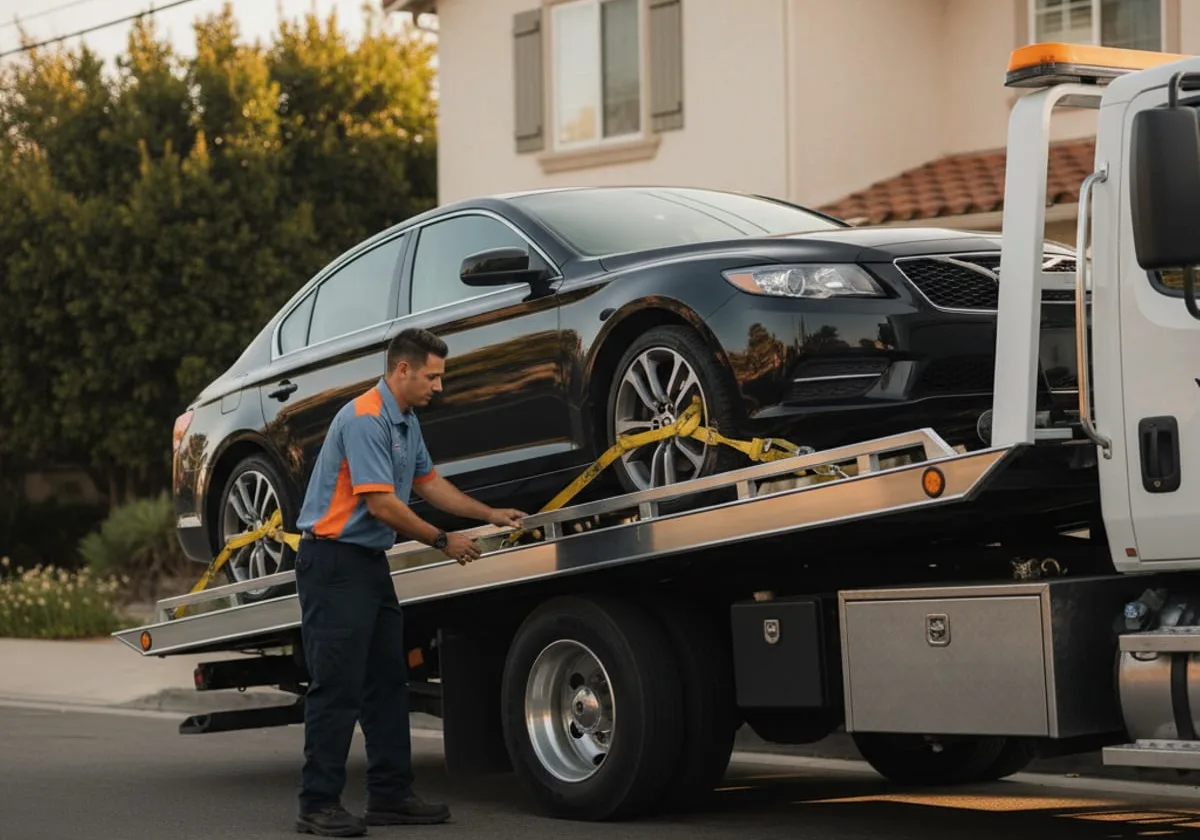
An AWD car needs a towing method that matches its exact drivetrain requirements. A flatbed is often the first option considered, but it isn’t a universal rule. The owner’s manual and the car’s condition should guide the final decision.
That decision matters on crowded Atlanta roads. A disabled crossover near Spaghetti Junction presents different access problems than one parked in a Marietta driveway. Tell the operator exactly what happened before equipment gets dispatched.
How an AWD drivetrain changes the decision
All-wheel drive can send power through more than one axle. However, AWD systems aren’t identical across manufacturers or model years. The correct towing procedure for one crossover may be prohibited for another.
That variation is why the AWD badge alone isn’t enough. The operator needs the year, make, model, and drivetrain. Some model lines offer front-wheel-drive and AWD versions with nearly identical exterior badges. Don’t guess which version you have.
Your owner’s manual is the controlling source for vehicle-specific towing instructions. Look for sections called “towing,” “emergency towing,” “roadside assistance,” or “recreational towing.” Those sections may identify permitted wheel positions, speed restrictions, distance restrictions, or required equipment.
The car’s current condition also changes the decision. Tell the operator if:
- The transmission won’t shift into neutral.
- The parking brake won’t release.
- A wheel is bent, locked, or missing.
- The steering is locked.
- The car has collision damage.
- The vehicle sits unusually low.
- The keys are missing or trapped inside.
- The car is in a garage or tight parking deck.
These details can matter as much as the drivetrain. A method allowed for a normally rolling vehicle may not suit one with locked wheels or suspension damage.
Location adds another layer. Access can be limited along Buford Highway, inside a Midtown garage, or near tightly packed lots around State Farm Arena. On the Downtown Connector, traffic exposure may also affect how the operator approaches the vehicle. The goal is to match the equipment to both the car and the scene.
When a flatbed is the safer choice
A flatbed carries the vehicle with all four wheels supported on the truck’s bed. That makes flatbed towing the usual starting point when the manual says the driven wheels shouldn’t roll during transport.
It may also make sense when the drivetrain configuration isn’t clear. An operator can review the details you provide and compare them with the manufacturer’s instructions. Don’t rely on the badge, body style, or a quick internet comment alone.
A flatbed deserves strong consideration when the vehicle has collision damage. A bent wheel, damaged suspension part, leaking fluid, or dragging body panel can complicate loading. Tell the operator about visible damage before dispatch. Photos may help the operator understand the car’s position, but they don’t replace an on-scene assessment.
Low ground clearance matters too. Sports sedans, modified cars, and crossovers with damaged suspension may need a different loading approach. Tell the operator about front splitters, side skirts, hitch-mounted accessories, or anything hanging beneath the car.
Atlanta’s terrain and road design can affect access. A vehicle stopped near the Grady Curve may face limited shoulder space. A car inside a Buckhead parking deck may have low overhead clearance. A flatbed might fit at one location but not another. The dispatch decision must account for the available working space.
A flatbed is still equipment, not a promise against damage. Proper loading depends on the vehicle, scene, securement points, and manufacturer instructions. Share complete information so the dispatched operator can evaluate those factors before moving the car.
When a wheel-lift setup may work
A wheel lift raises one end of the vehicle while another set of wheels remains near the road. Whether that setup may be used for an AWD car depends on the manufacturer’s instructions and the operator’s equipment.
In some situations, an operator may discuss supporting the other wheels with dollies. That doesn’t automatically make the setup correct for every AWD vehicle. Ask the operator to follow the towing section of your manual, including any stated limits.
A wheel-lift towing setup may enter the conversation when a flatbed can’t reach the car. That can happen in parking decks, narrow alleys, crowded apartment lots, or spaces with limited turning room. The operator still needs to determine whether the setup matches the vehicle’s requirements.
Don’t authorize movement based only on a short trip. A nearby repair shop doesn’t erase the manufacturer’s towing restrictions. Distance is one factor, but it isn’t the only one. Wheel position, transmission condition, transfer-case design, and vehicle damage may also influence the method.
The exact towing arrangement should be settled before the vehicle moves. Ask these direct questions:
- Will any of the car’s wheels roll on the road?
- Does this setup follow the owner’s manual?
- Are dollies needed for the remaining wheels?
- Does the vehicle need a special neutral procedure?
- Can the equipment reach the car’s current position?
- What price will the operator quote before dispatch?
Price for a consensual roadside tow is set by the independent operator. It isn’t the same as an Atlanta police impound or a non-consensual private-property tow. For the roadside call discussed here, the price should be quoted before dispatch.
If the proposed method conflicts with your manual, stop and clarify the plan. The manual’s model-specific directions carry more weight than a general rule about AWD vehicles.
What to tell the operator before dispatch
Start with the vehicle’s full identity. Give the exact model year, manufacturer, model, trim if known, and AWD designation. A registration document, insurance card, or manufacturer app may help you confirm those details.
Then describe what the car is doing. “It won’t move” leaves important gaps. Explain whether the engine starts, the transmission shifts, the steering turns, and the parking brake releases. Mention warning lights if you can read them safely.
Describe all visible damage. Include flat tires, bent wheels, leaking fluids, broken suspension parts, or loose body panels. Don’t crawl beneath a disabled vehicle to inspect it. Stay away from moving traffic, especially along I-285, GA-400, I-20, and the Downtown Connector.
Location details help prevent an equipment mismatch. Share the street, direction of travel, nearby exit, and recognizable landmark. For a garage, give the level and posted clearance. For a gated property, explain how the operator can enter.
Atlanta drivers should also distinguish roadside assistance from transport. A dead battery, empty fuel tank, lockout, or changeable tire may not require towing. However, don’t attempt roadside work where traffic or vehicle damage makes the scene unsafe.
On metro freeways, GDOT HERO patrols corridors and helps clear roadway hazards. HERO isn’t a substitute for transport to a repair shop. If there is an immediate danger, collision, fire, injury, or blocked travel lane, contact 911 first.
Before dispatch, confirm:
- The operator received the exact vehicle details.
- The operator knows the car is AWD.
- The access conditions were explained.
- The visible damage was disclosed.
- The proposed setup matches the manual.
- The operator provided the price for the requested tow.
Complete information gives the operator a clearer basis for choosing equipment. It also reduces the chance that a different setup will be needed after arrival.
How to check your owner’s manual
Use the manual for your exact model year. Instructions can change between generations, even when two vehicles share the same name. A manual for a similar model isn’t a safe substitute.
Check the printed manual in the glove box first. Use its index to find “towing,” “emergency towing,” “disabled vehicle,” or “roadside assistance.” Read the entire relevant section, including warnings and diagrams.
If the printed manual isn’t available, visit the manufacturer’s official website. Many manufacturers provide searchable manuals by model and year. Enter the vehicle identification details carefully. Avoid relying on forum posts, dealership summaries, or instructions copied from another model.
Look for answers to several practical points:
- May any wheels remain on the road?
- Does the transmission need to be in neutral?
- Is there an electronic parking-brake release procedure?
- Is a flatbed specified?
- Are dollies discussed or required?
- Does the manual prohibit a particular towing position?
- Is there a special procedure when power is unavailable?
Don’t force the shifter, steering, or parking brake to follow a procedure you don’t understand. Some controls depend on battery power or model-specific steps. Read the instructions to the operator or share the relevant manual page.
If the manual’s language remains unclear, contact the vehicle manufacturer’s roadside assistance or customer support channel. Ask about your exact year, model, drivetrain, and current condition. Don’t accept a generalized answer for a different trim.
Save a screenshot or photo of the towing instructions on your phone. That can help when you’re stopped near the Brookwood split, the Perimeter, or another noisy location. It also gives the operator the same reference you’re using.
When to call us
Call when your AWD car can’t be moved safely under its own power or the manual calls for towing equipment. The line takes calls 24 hours a day, and Quick Tow ATL matches drivers with independent local operators who set the price before dispatch. Call us at (404) 476-5878.